
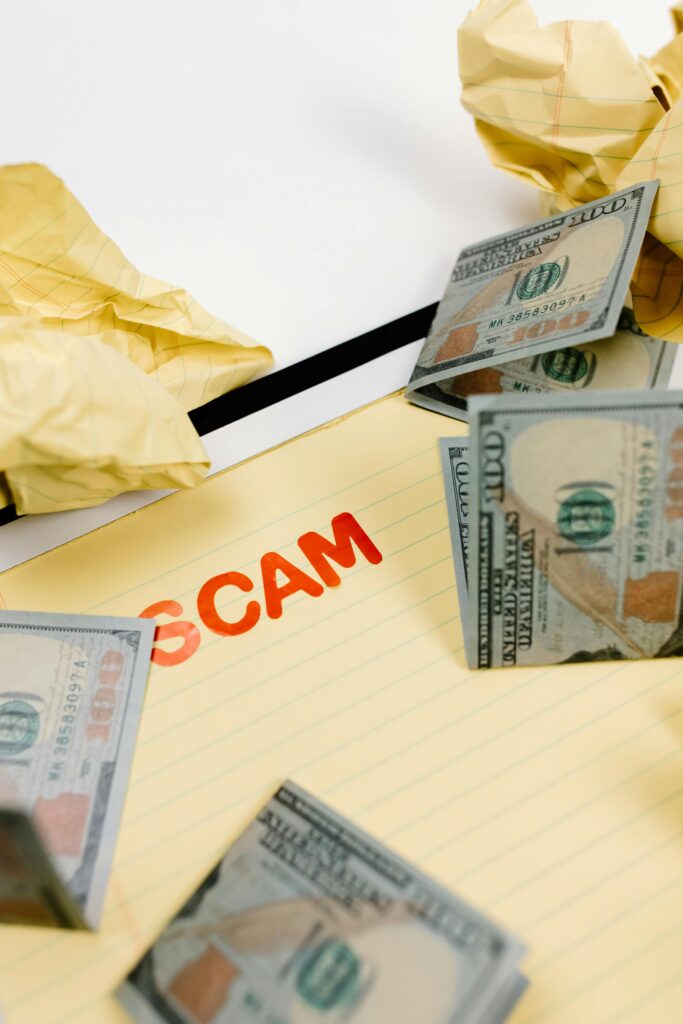
On paper, it shouldn’t happen. The victim is financially sophisticated, socially connected, and surrounded by advisors. He signs contracts for a living. He’s built a business, navigated lawsuits, negotiated acquisitions, survived betrayals. And yet, in private—often late at night, on a second phone, behind the respectable façade—he’s wiring money, buying gift cards, funding “investments,” paying a “customs fee,” or sending cryptocurrency to a person he believes is building a future with him.
Romance and confidence scams are not a fringe phenomenon. In the FBI’s 2024 Internet Crime Complaint Center (IC3) report, “Confidence/Romance” scams accounted for 17,910 complaints and $672,009,052 in reported losses. The FTC, meanwhile, continues to warn that romance scams generate some of the highest per-person losses among imposter-type fraud, with reported losses exceeding $1 billion in a recent year and a median loss around $2,000 (and far higher for some victims). Federal Trade Commission and law enforcement increasingly describes a hybrid model that fuses affection with finance—confidence-building followed by investment fraud—especially in cryptocurrency. The FBI explicitly frames “cryptocurrency investment fraud” as a confidence-based scam that often begins with relationship-building.
So why do wealthy men—men with resources, status, and experience—remain vulnerable?
The “Gold Digger” Myth Obscures the Modern Reality
There’s an old cultural script: a “gold digger” pursues a rich man for lifestyle access, maybe marriage, maybe a settlement. That story is crude, but it implies something transactional and, importantly, visible. Friends can see the relationship. Family can object. Lawyers can draft prenups. The risk is reputational and emotional, but the mechanics are straightforward.
Today’s relationship scams are often something else entirely: industrialized, remote, psychologically precise, and engineered for extraction. The “person” the victim falls for may not exist. The face might be stolen from social media, generated, or fronted by an accomplice. Conversations may be managed by teams. The affection is not merely opportunistic—it’s operational.
International police organizations have warned that organized crime groups run large-scale “romance baiting” operations, sometimes linked to broader cyber-enabled fraud. The point is not dating. The point is control—over attention, over secrecy, over identity, and eventually over money.
This is also where public blame becomes part of the scam’s power. The victim is primed to anticipate ridicule: How could you fall for that? That shame—real or anticipated—becomes a tool for silencing.
Why Wealthy Men Make Attractive Targets
1) They can pay—quickly, repeatedly, and discreetly.
Relationship scams thrive on frictionless liquidity. Wealthy men often have access to large sums without needing to explain every transfer. Many also have business structures that allow funds to move in ways that look, superficially, like legitimate transactions.
2) Their privacy is a pressure point.
High-status individuals are often deeply invested in confidentiality—divorce histories, public reputations, board seats, donor networks, religious communities, professional licensing. A scammer doesn’t need explicit blackmail at first; the threat of embarrassment is enough. INTERPOL has even argued that dehumanizing language around these frauds can deter reporting because victims feel shamed.
3) Their lives can be lonelier than they appear.
Wealth can insulate people from honest feedback. It can also reduce the number of “equal” relationships—people who feel safe saying no, challenging decisions, or asking uncomfortable questions. Loneliness isn’t about being alone; it’s about feeling unknown. Scammers are professional “knowers.” They mirror. They validate. They listen. And they do it with relentless consistency—often more consistently than real life allows.
4) Success can breed a dangerous bias: “I can handle it.”
Many victims don’t present as naïve. They present as confident. They believe they can manage the relationship, manage the risk, manage the money. The scam doesn’t ask for everything at once. It asks for small proof-of-love gestures, then small emergencies, then a bigger “temporary” bridge. By the time the numbers are large, the victim isn’t just defending the relationship—he’s defending his identity as a competent man.
How the Scam Works Now: Emotional Engineering Meets Financial Extraction
Modern relationship scams tend to follow a recognizable pattern:
- Rapid intimacy: intense attention, frequent messaging, future talk (“we,” not “I”).
- Isolation: subtle discouragement from friends and family (“they don’t understand us,” “they’re jealous”).
- A legitimacy wrapper: claims of being a professional abroad, a successful entrepreneur, a military contractor, a model with “security restrictions,” a widow with assets tied up—whatever story makes video calls inconvenient and money requests plausible.
- The financial pivot: an emergency, a travel problem, a medical crisis—or increasingly, an “investment opportunity” framed as something couples do together.
The FBI has described cryptocurrency investment fraud—often popularly labeled “pig butchering”—as a confidence-based model where a relationship is built first, then the victim is coached into investing in what appears to be a highly profitable platform, only to be blocked from withdrawing funds. In the same IC3 report, cryptocurrency investment fraud generated staggering losses—$5.8 billion—highlighting just how financially catastrophic these confidence-driven schemes can become.
For wealthy men, the “investment” angle is particularly potent because it flatters competence. It reframes victimhood as savvy: You’re not sending money to a stranger—you’re making a strategic move. When shame later arrives, it arrives with teeth.
Why It Often Goes Unreported (and Why Society Shrugs)
1) Status makes “perfect victim” expectations harsher.
Society is more comfortable with a victim who appears powerless. Wealth complicates that narrative. The public often treats rich victims as if they “paid for a lesson,” not as people who were targeted and manipulated. That cultural shrug matters—because the victim can feel it coming, and chooses silence.
2) Many scams are transnational and hard to prosecute.
Even when victims report, cases can span multiple jurisdictions, shell companies, money mules, crypto exchanges, and overseas actors. Recovery is difficult, evidence is scattered, and perpetrators are often out of reach. Law enforcement may prioritize cases with clearer jurisdiction, more victims, or better odds of disruption.
3) Victims fear reputational blowback—family, business, custody, headlines.
For a high-profile man, admitting he was emotionally manipulated can feel professionally catastrophic. In sensitive industries (finance, politics, law, medicine), reputational damage can be existential. Some victims also fear that acknowledging the scam will expose other private vulnerabilities—affairs, sextortion attempts, private photos, or simply the fact that they were looking for love outside their public life.
4) The emotional injury is real—and under-discussed.
Research into online romance scam victims documents deep shame, guilt, and psychological distress. This matters because emotional harm drives the very behaviors that keep scams hidden: avoidance, secrecy, denial, and self-blame.
And it’s worth saying plainly: being wealthy does not make someone immune to coercion. It often makes the coercion more sophisticated—and the consequences more humiliating.
A More Honest Frame: Empathy Without Excusing, Accountability Without Mockery
An investigative lens doesn’t require a morality play. Wealthy men are not automatically sympathetic, and they are not automatically blameworthy. Many are imperfect victims—sometimes arrogant, sometimes reckless, sometimes pursuing intimacy in ways they wouldn’t want publicly scrutinized. But imperfection does not equal consent to abuse.
The simplest way to understand the phenomenon is also the most uncomfortable: these scams work because they exploit universal human needs—connection, admiration, hope—then weaponize shame to keep the extraction going. When society laughs, the scammer wins twice: once with the money, and once with the silence.
If public attitudes and institutional responses are going to catch up to the scale of the problem, the first step is retiring the lazy caricatures—of the “gold digger,” of the “idiot rich guy,” of the “he deserved it.” Modern relationship fraud is not dating drama. It’s a confidence crime with a love story as its camouflage, and it thrives wherever victims are too embarrassed to say, out loud, what happened to them.
rich men are targets cause they are rich and the women that target them are evil and conniving. They need to make laws to better protect people from this stuff, but at same time people need to learn that researching who you are dating before getting serious is mandatory in todays world
Yes, research is important, good idea for the next article!
It’s been happening forever, guys want a woman cause she looks good and woman want that bag! The problem is when they go in with the plan to screw him over. That becomes some triflin shit.
Men need to quit being ashamed, love is blind its not the victims fault
THIS RIGHT HERE!